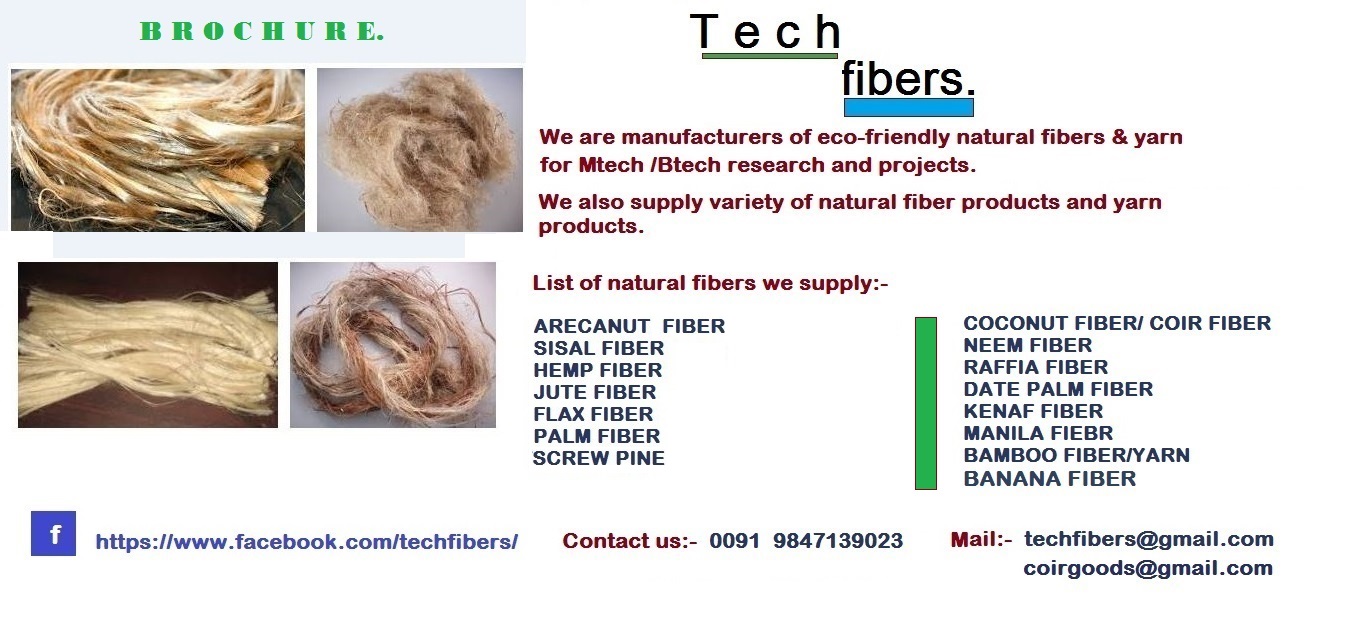
Our products have a prestigious position in the International markets and all over the world for decorating & furnishing well Known buildings Offices.
International market offering Interior and Exterior high quality products to our Valued Customers. Thanks
_OUR FIBRES_
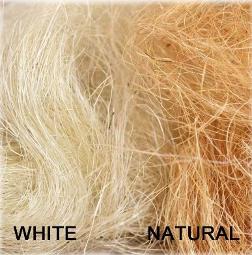
SISAL FIBER
SISAL-the botanical name Agave sisalana, is a species of Agave widely cultivated and naturalized in many other countries. It yields a stiff fibre used in making various products. The term sisal may refer either to the plant's common name or the fibre, depending on the context. It is sometimes referred to as "sisal hemp", because for centuries hemp was a major source for fibre, and other fibre sources were named after it.
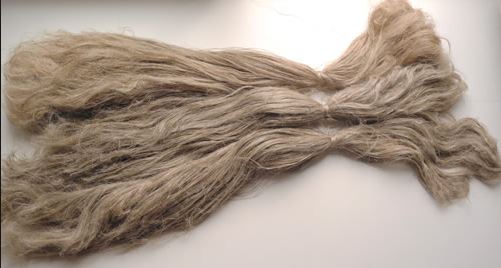
FLAX FIBER
FLAX- (also known as common flax or linseed), Linum usitatissimum, is a member of the genus Linum in the family Linaceae. It is a food and fiber crop cultivated in cooler regions of the world. The textiles made from flax are known in the Western countries as linen, and traditionally used for bed sheets, underclothes, and table linen.
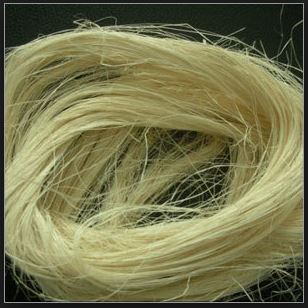
BANANA FIBER
Banana plant not only gives the delicious fruit but it also provides textile fiber, the banana fiber. It grows easily as it sets out young shoots and is most commonly found in hot tropical climates. All varieties of banana plants have fibers in abundance. These fibers are obtained after the fruit is harvested and fall in the group of bast fibers. This plant has long been a good source for high quality textiles in many parts of the world.
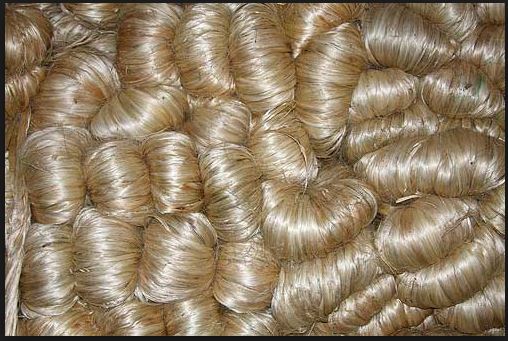
JUTE FIBER
JUTE is a long, soft, shiny vegetable fiber that can be spun into coarse, strong threads. It is produced primarily from plants in the genus Corchorus, which was once classified with the family Tiliaceae, and more recently with Malvaceae. The primary source of the fiber is Corchorus olitorius, but it is considered inferior to Corchorus capsularis. "Jute" is the name of the plant or fiber that is used to make burlap, hessian or gunny cloth.
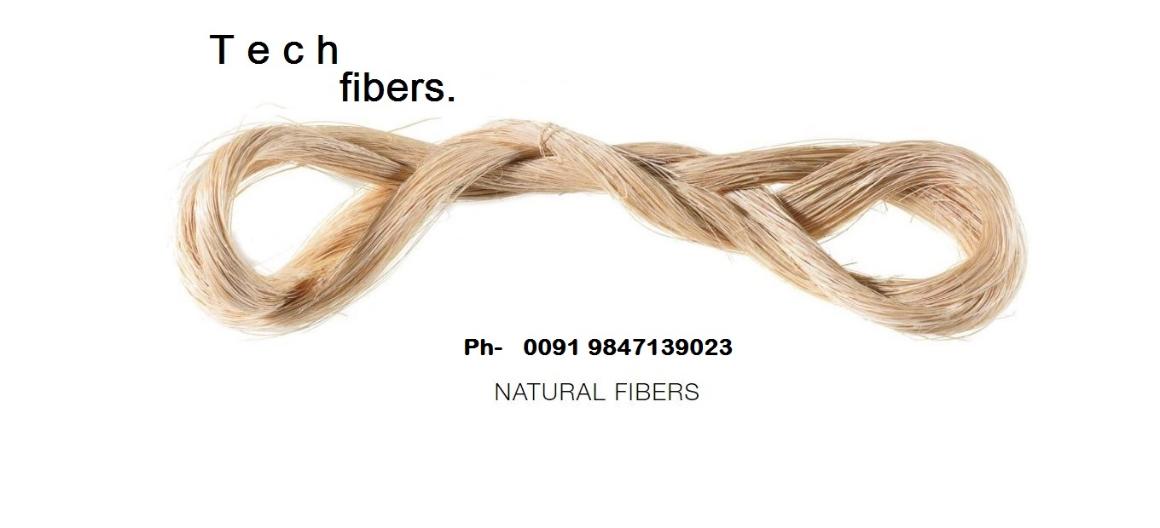
Processing & application of Fibres.
INTRODUCTION
Fibers, Yarns, & Threads are the basic requirement of any textile, apparel or related industry. Thus, the fiber manufacturers keep in mind the demands of natural fibers as well as of synthetic fibers. As far as yarns are concerned, there are different categories available in the market such as material yarn, yarn by fiber, and yarn by making process. The Fibers, Yarns and Threads Companies Directory lists the yarn manufacturers and wholesale suppliers of all the types of yarns PROCESSES
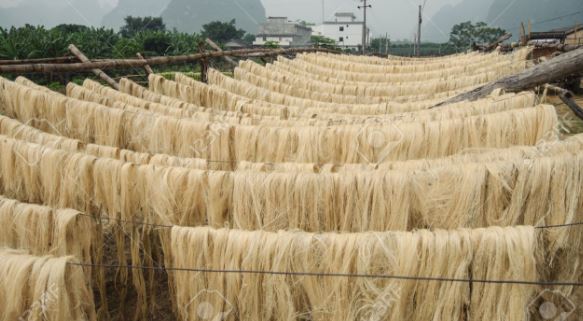
The leaves and shoots of the palm/ plant are pruned periodically to ensure their softness. The harvested shoots are first boiled in lye to prepare the fibers for making the yarn. These shoots give away fibers having varying degrees of softness. This further results in yarns and textiles with differing qualities that can be used for specific purposes. The outermost fibers of the shoots are the coarsest ones. They are therefore, more suitable for making such home furnishings as tablecloths. The softest part is the innermost part that gives soft fibers which are widely used for making variety of natural handicraft products for Fashion technology, Engineering researches, Interior decoratings. In the recent past, natural plant fibers had a very limited application and was primarily used for making items like ropes, mats, and some other composite materials. With the increasing environmental awareness and growing importance of eco-friendly fabrics, plant fiber has also been recognized for all its good qualities and now its application is increasing in other fields too such as apparel garments and home furnishings. However, in Japan, it is being used for making dresses due to its being lightweight and comfortable to wear, it is still preferred by people there as summer wear. Natural fiber is also used to make fine cushion covers, Necties, bags, table cloths, curtains etc. Rugs made from yarn fibers are also very popular world over.
Characteristics of Natural Fiber
- The chemical composition of natural fibers are cellulose, hemicellulose, and lignin.
- Natural fibers are highly strong fiber.
- It has smaller elongation.
- It has somewhat shiny appearance depending upon the extraction & spinning process.
- It is light weight.
- It has strong moisture absorption quality. It absorbs as well as releases moisture very fast.
- It is bio- degradable and has no negative effect on environment and thus can be categorized as eco-friendly fiber.
- Its average fineness is 2400Nm.
- It can be spun through almost all the methods of spinning including ring spinning, open-end spinning, bast fiber spinning, and semi-worsted spinning.
OTHER FIBRES.
Apart from these we have majority of other fibers such as Kaitha, Kenaf, Raffia, Date Palm, Coconut/Coir, Arecanut, Hemp, Sisal, Manila, Agave etc
Natural fibers for handicrafts, textiles,interior decorations, fashion designing, shopping, engineering Mtech/Btech research/ projects.
Mail--- techfibers@gmail.com
Phone/Whatsapp--- +91- 9847139023
fb-- https://www.facebook.com/techfibers/
Web- www.techfibers.yolasite.com
www.windowfashionsindia.com
www.coirgoods.com

Copyright Tech Fibers